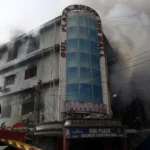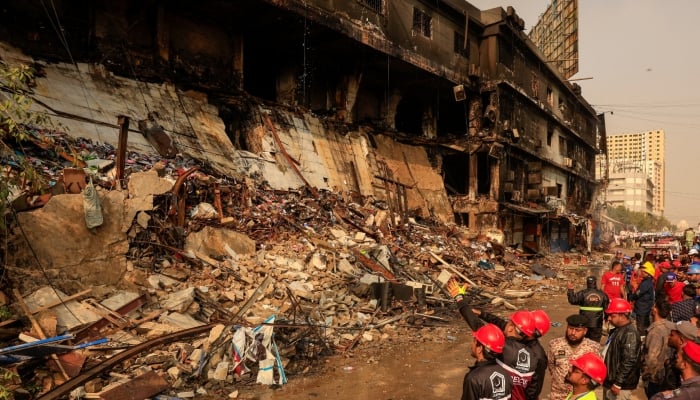

Karachi’s bustling heart has been plunged into profound grief following the devastating inferno at Gul Plaza. What began as a fire on Saturday night quickly escalated into a national tragedy, claiming at least 23 lives, with dozens still missing. As rescue efforts continue amid smouldering debris, the full scale of the catastrophe is gradually emerging—revealing a harrowing tale of loss, unanswered questions, and a growing call for accountability.
Fire Reignites as Structure Faces Collapse
The multi-storey Gul Plaza, a major commercial hub spanning 8,000 square yards and housing nearly 1,200 shops on M.A. Jinnah Road, caught fire late Saturday night. Despite initial reports that the blaze had been extinguished on Sunday, flames reignited on Monday, forcing emergency crews to resume firefighting operations.
Firefighters, assisted by the Pakistan Navy and the Karachi Water and Sewerage Corporation (KWSC), battled the blaze for over 24 hours, deploying 16 fire tenders and using more than 431,000 gallons of water. However, the intensity of the fire and the building’s weakened structure posed severe challenges. Officials confirmed that around 40 per cent of the mall has collapsed, while the remaining structure is considered unsafe, raising the possibility of complete demolition.
Rising Death Toll and Agonising Search for the Missing
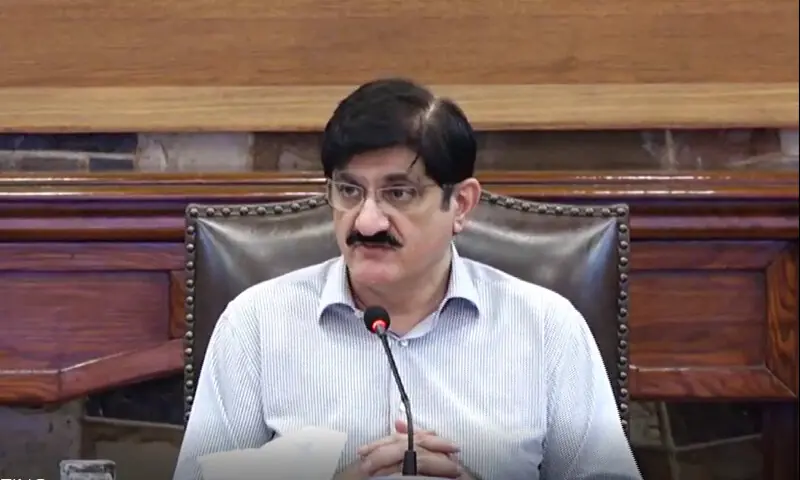
The human cost of the Gul Plaza tragedy is devastating. Deputy Inspector General Syed Asad Raza confirmed the recovery of 23 bodies, some of which were fragmented and require DNA testing for identification. Karachi Mayor Murtaza Wahab stated that 65 people remain missing, while Sindh Chief Minister Murad Ali Shah warned that the final death toll could rise to as high as 80.
Families continue to endure agonising uncertainty. Raheel Ibrahim searches desperately for his cousin Naveed Juma, who went missing after midnight on Saturday. An elderly man waits in anguish for news of his daughter, daughter-in-law, and sister. These deeply personal tragedies underline the urgency—and difficulty—of the identification process, which authorities admit may take considerable time.
Government Announces Compensation and Investigation
In response to the tragedy, the Sindh government announced several measures. CM Murad Ali Shah declared Rs10 million compensation for each deceased victim’s family, acknowledging that financial support cannot replace lost lives but reaffirming the government’s responsibility.
An inquiry committee, headed by Karachi Commissioner Hassan Naqvi, has been formed to investigate the incident. While Additional IG Azad Khan stated that there is currently no evidence of arson, officials said the inquiry would examine structural safety, fire prevention failures, and response delays.
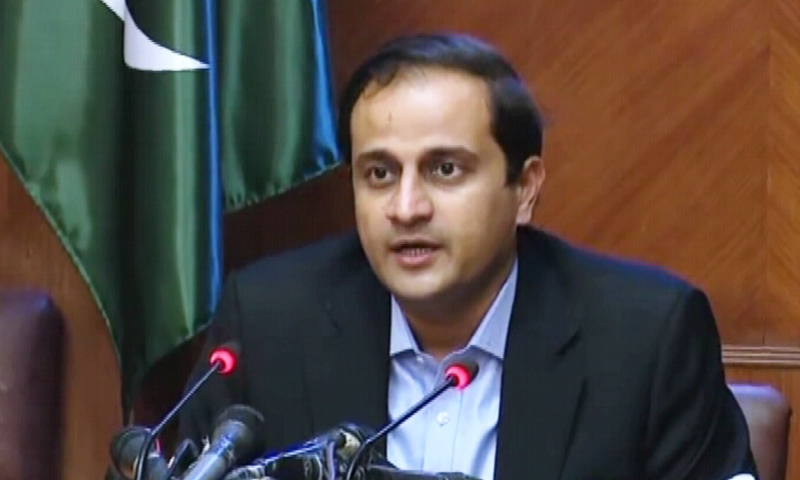
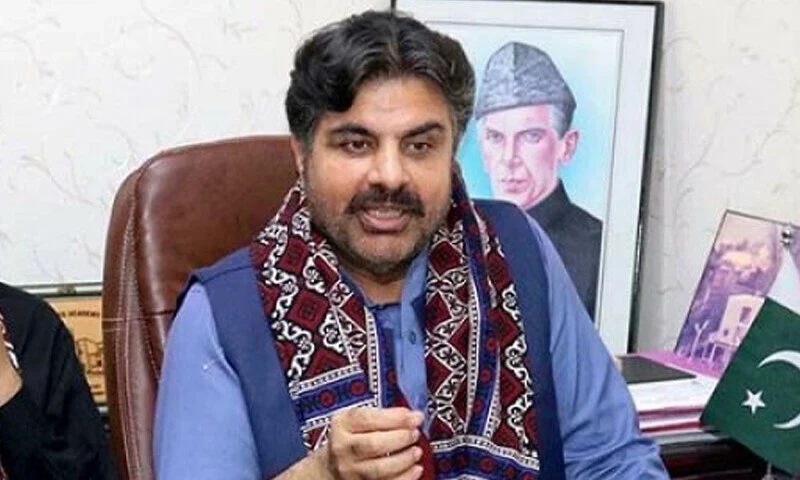
Mayor Murtaza Wahab confirmed that cooling operations are ongoing and that rescue teams are continuing access efforts. Sindh Local Government Minister Nasir Hussain Shah also indicated that a judicial commission could be established if required.
Rehabilitation Plans for Affected Traders
Looking ahead, CM Murad Ali Shah pledged full rehabilitation for affected traders. A separate committee has been tasked with assessing financial losses, arranging temporary commercial spaces, and preparing a roadmap for the reconstruction of Gul Plaza.
The chief minister also stressed the need to strengthen local disaster management authorities, improve equipment availability, and enhance emergency preparedness—an issue repeatedly highlighted by pakistanpk.online in its coverage of urban safety challenges.
Public Anger Over Delayed Response and Resource Gaps
Amid official assurances, anger and frustration continue to surface at ground level. Families and traders criticised what they described as a delayed and under-resourced response. Shopkeepers questioned why a full-scale operation was not launched sooner, particularly given the proximity of Saddar Fire Station.
Residents also reported water shortages during the early hours of the fire and raised concerns about traffic congestion on M.A. Jinnah Road, which allegedly slowed fire tenders. These complaints point to serious gaps in emergency coordination and infrastructure planning.
A National Tragedy and a Wake-Up Call
Sindh Governor Kamran Tessori rightly termed the incident a “national tragedy”, stressing that while determining the cause is crucial, the immediate priority must remain saving lives and supporting affected families.
The disaster has reignited debate over building safety laws, fire alarm systems, and the lack of enforcement in older commercial structures. Government pledges to modernise safety mechanisms and strengthen disaster response systems will now be closely scrutinised.
International Condolences and Solidarity
The tragedy has drawn condolences from across the world. Diplomatic missions from the United Kingdom, Turkey, Russia, Germany, and France expressed deep sorrow and solidarity with Pakistan, standing with the victims and their families during this painful time.
Tragedy That Demands Accountability and Reform
The Gul Plaza inferno is a wound that will take time to heal. It has exposed serious vulnerabilities in urban safety, infrastructure oversight, and emergency response. As Karachi mourns, the hope remains that this tragedy will serve as a catalyst for systemic reform, stronger accountability, and meaningful change.
For continued updates, investigations, and in-depth analysis, stay connected with pakistanpk.online. Our thoughts remain with the victims, their families, and the resilient people of Karachi.